Why Warren Buffett’s investing rule No. 1 is perfect for Brexit

If you want to learn how to protect your stocks and shares investments from Brexit, Warren Buffett knows the way.

The content of this article was relevant at the time of publishing. Circumstances change continuously and caution should therefore be exercised when relying upon any content contained within this article.

You’re reading a free article with opinions that may differ from The Motley Fool’s Premium Investing Services. Become a Motley Fool member today to get instant access to our top analyst recommendations, in-depth research, investing resources, and more. Learn More.

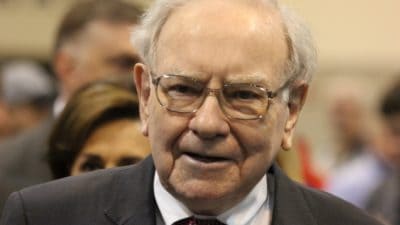
Warren Buffett’s first rule of investing is simple: Never lose money. His second is equally straightforward: Never forget rule No. 1. Rules like this really come to the fore when we’re in times of crisis like Brexit. If we crash out of the EU with no deal, our economy could be in for a hammering.

Important

Why is Buffett’s first rule so important at such times? Crises can present some of the most likely scenarios for losing money. But there’s also what I see as a simple fact — loss-avoiding rules are the best rules for long-term investment at any time, good or bad.

As an example, during the final weeks of the demise of Thomas Cook, I saw two distinct schools of thought emerging. One approach was to see a recovery opportunity, based on how much money you might gain by buying the shares when they were down. It was essentially based just on the share price itself, and there’s a strong emotive feeling shared by many that what goes down, must come back up. When Thomas Cook shares were trading at 6p, for example, they’d lost a whopping 130p since the price slide set in.

Quick profit

But you wouldn’t need anything like a 130p recovery to make a mint. Just a 6p gain would double your money. Even a five-bagger would only need a 24p rise. And after a 130p fall, gains of pennies like that can instinctively seem very plausible.

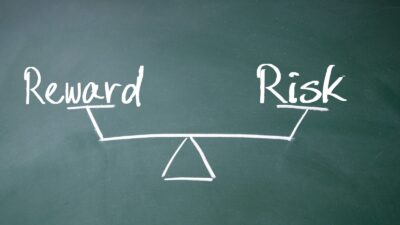
Now, the “Never lose money” Buffett follower would, instead, be looking at it entirely differently. Rather than asking “how easy could I double my money?” I’d be thinking “what’s the biggest loss I could suffer?” That, obviously, was 100%. And you didn’t need hindsight, as we knew for a fact the debt-ridden company was fighting for its very survival.

But back (as ever) to Brexit. One of the effects of Brexit uncertainty is, perhaps ironically, that a lot of investors seem to be migrating away from whatever is their usual strategy and embracing Buffett’s advice.

Safety

The result is a so-called flight to safety, as people seek out the kinds of shares that are least likely to fall as a result of Brexit troubles. Investors are abandoning UK-centric companies that are most at risk from a UK recession, and instead are going for top international companies paying safe dividends.

But the thing is, I reckon top international companies paying safe dividends are the best investments there are for the long term anyway. They’re the kind of companies that prosper through both good times and bad.

I reckon we’d all be a lot better off if we always invested as though a no-deal Brexit was around the corner, and always bought shares in companies least likely to lose us money rather than looking for the next multi-bagger.


Alan Oscroft has no position in any of the shares mentioned. The Motley Fool UK has no position in any of the shares mentioned. Views expressed on the companies mentioned in this article are those of the writer and therefore may differ from the official recommendations we make in our subscription services such as Share Advisor, Hidden Winners and Pro. Here at The Motley Fool we believe that considering a diverse range of insights makes us better investors.

More on Investing Articles

DIVIDEND YIELD text written on a notebook with chart
Investing Articles

Is this the best time to buy dividend shares since Covid-19?

A volatile stock market gives investors a chance to buy shares with unusually high dividend yields. Stephen Wright highlights one…

Read more »

UK financial background: share prices and stock graph overlaid on an image of the Union Jack
Investing Articles

Are we staring at a once-in-a-decade chance to buy this beaten-down UK growth stock?

Investors couldn't get enough of this FTSE 100 growth stock, but the last 10 years have been pretty frustrating. Could…

Read more »

Person holding magnifying glass over important document, reading the small print
Investing Articles

What I look for when searching for shares to buy

There’s a lot that goes into finding shares to buy. Ultimately though, it comes down to two things: numbers that…

Read more »

piggy bank, searching with binoculars
Investing Articles

This UK investor made a fortune from gold and oil. Which FTSE 100 shares does he like now?

The FTSE 100 has sold off recently, leaving some shares looking enticing, including this ultra-high-yield dividend payer.

Read more »

Middle aged businesswoman using laptop while working from home
Investing Articles

Passive income of £2,000 a month in an ISA? Here’s how an investor could aim for that

Harvey Jones does a few simple sums to show how an investor could generate £24,000 a year in passive income…

Read more »

Two business people sitting at cafe working on new project using laptop. Young businesswoman taking notes and businessman working on laptop computer.
Investing Articles

What £15,000 invested in Vodafone shares 1 year ago is worth today…

After a decade or two in the doldrums, Vodafone shares are back. But are they starting to look a little…

Read more »

Engineer Project Manager Talks With Scientist working on Computer
Investing Articles

After 5 long years, is this S&P 500 stock finally ready to bounce back?

All businesses go through tough times, but the best ones don’t stay down for long. Could this S&P 500 stock…

Read more »

Retirement saving and pension planning
Investing Articles

The State Pension age is rising to 67. I’m buying UK shares to protect myself!

As the State Pension age rises, it's essential to find other ways to make money for retirement. That's why I'm…

Read more »