7 tips to survive bear markets and stock-market crashes

Global investors were shocked when the US S&P 500 collapsed by over 21% in mere weeks. Though we may have avoided a bear market, these are nervy times.

| More on:

The content of this article was relevant at the time of publishing. Circumstances change continuously and caution should therefore be exercised when relying upon any content contained within this article.

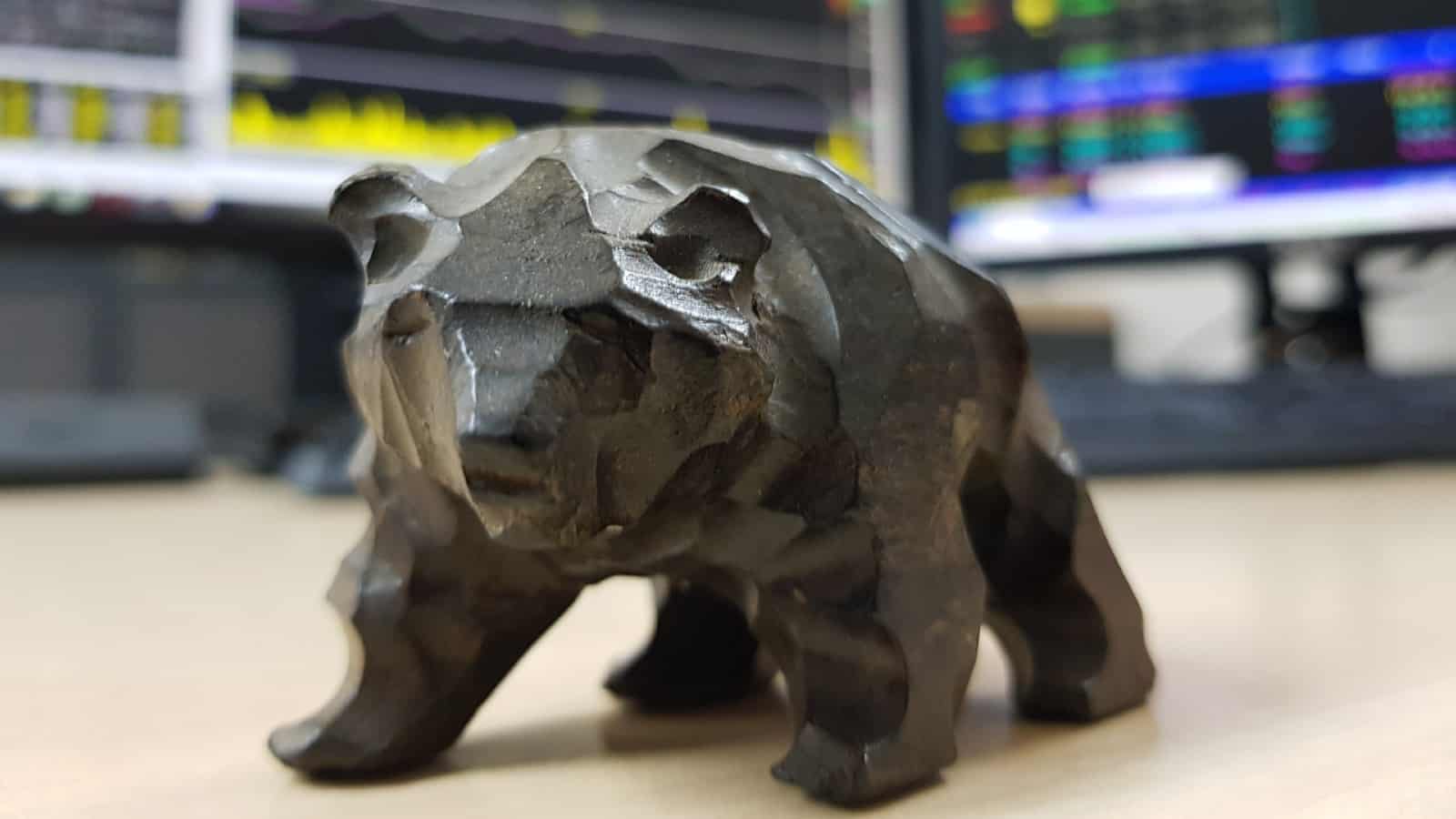
Tabletop model of a bear sat on desk in front of monitors showing stock charts

Image source: Getty Images

You’re reading a free article with opinions that may differ from The Motley Fool’s Premium Investing Services. Become a Motley Fool member today to get instant access to our top analyst recommendations, in-depth research, investing resources, and more. Learn More.

After five years of rising US stock prices, global investors got an April shock. After peaking at a record high on 19 February, the S&P 500 index retreated. And when President Trump introduced hefty tariffs on US imports, share prices plunged. It seemed that US stocks were heading for a bear market — when prices drop 20%+ from a previous peak for a prolonged period.

Bear-market blues

Since 1928, the S&P 500 has seen 21 bear markets, or one every 4.6 years or so. In my long experience, all stock-market bubbles and busts have similar causes. Stock prices become excessive until something pricks and bursts these bubbles.

During market downturns, investors worry about their withering wealth. Here are my seven tips to avoid the most common mistakes during steep declines and bear markets alike.

1. Don’t panic! — The front cover of The Hitchhiker’s Guide to the Galaxy by Douglas Adams offered this advice to cosmic travellers. It’s also my #1 instruction for scared shareholders.

2. Daily drops are scary — In a two-day collapse this month, global stocks lost $10trn in value. This sudden, steep decline shocked investors, but the S&P 500 is up 10% since 8 April. Often, calm returns after market storms.

3. Buy the dips? — One powerful market mantra over the past 15 years has been to buy the dip. When stock prices plummet, value-seekers rush in to buy. History suggests this is wise, but it can go wrong during brutal bear markets.

4. Keep some cash — I’ve found that keeping 100% of my family wealth in stocks can be counter-productive. Nowadays, we keep a pot of cash to buy during panic selling.

5. It’s all about the falls — When buying shares, my timescale is five to 10 years. When prices plunge, I love buying into great businesses at better prices. Over decades, this has worked well for my family.

6. Don’t miss the recovery — In the beastly bear market of 2007-09, the S&P 500 bottomed out at 666 points on 6 March 2009. In a devilishly (geddit?) daring move, we dumped cash into US stocks at that time. Since then, this pot has grown to around nine times its original value. Yay.

7. Trim your tax bill — When selling shares at a loss, be sure to use these losses to offset your gains, so as to reduce your liability for capital gains tax (CGT).

I Meta cheap stock

With stock prices crashing since mid-February, I’ve scoured the S&P 500 for bargains. Mark Zuckerberg’s Meta Platforms (NASDAQ: META) is now on my buy list.

As with other Magnificent Seven mega-cap tech stocks, Meta stock has been battered. At their record high on 14 February, Meta shares hit $740.91. Alas, this Valentine’s Day love-in didn’t last. The stock nosedived to close at $484.66 on Monday, 21 April. That’s a slide of 34.6% in under 10 weeks.

Meta stock currently trades at $541.13, valuing the owner of Facebook, Instagram, and WhatsApp at $1.36trn. The stock’s price-to-earnings ratio of 22.3 is second-lowest among the Mag 7 and the dividend yield has risen to 0.4% a year.

These fundamentals look too modest, so I aim to buy Meta soon. Of course, if the bear market returns with a vengeance, then Meta’s digital franchise could suffer badly. But I’ll take that risk!


Randi Zuckerberg, a former director of market development and spokeswoman for Facebook and sister to Meta Platforms CEO Mark Zuckerberg, is a member of The Motley Fool's board of directors. The Motley Fool UK has recommended Meta Platforms. Cliff D'Arcy has no position in any of the shares mentioned. Views expressed on the companies mentioned in this article are those of the writer and therefore may differ from the official recommendations we make in our subscription services, such as Share Advisor, Hidden Winners and Pro. Here at The Motley Fool, we believe that considering a diverse range of insights makes us better investors.

More on Investing Articles

Sunrise over Earth
Investing Articles

Meet the ex-penny share up 109% that has topped Rolls-Royce and Nvidia in 2025

The share price of this investment trust has gone from pennies to above £1 over the past couple of years.…

Read more »

House models and one with REIT - standing for real estate investment trust - written on it.
Investing Articles

1 of the FTSE 100’s most reliable dividend stocks for me to buy now?

With most dividend stocks with 6.5% yields, there's a problem with the underlying business. But LondonMetric Property is a rare…

Read more »

Investing Articles

Is 2026 the year to consider buying oil stocks?

The time to buy cyclical stocks is when they're out of fashion with investors. And that looks to be the…

Read more »

ISA coins
Investing Articles

3 reasons I’m skipping a Cash ISA in 2026

Putting money into a Cash ISA can feel safe. But in 2026 and beyond, that comfort could come at a…

Read more »

US Stock

I asked ChatGPT if the Tesla share price could outperform Nvidia in 2026, with this result!

Jon Smith considers the performance of the Tesla share price against Nvidia stock and compares his view for next year…

Read more »

Investing Articles

Greggs: is this FTSE 250 stock about to crash again in 2026?

After this FTSE 250 stock crashed in 2025, our writer wonders if it will do the same in 2026. Or…

Read more »

Investing Articles

7%+ yields! Here are 3 major UK dividend share forecasts for 2026 and beyond

Mark Hartley checks forecasts and considers the long-term passive income potential of three of the UK's most popular dividend shares.

Read more »

Hand is turning a dice and changes the direction of an arrow symbolizing that the value of an ETF (Exchange Traded Fund) is going up (or vice versa)
Investing Articles

2 top ETFs to consider for an ISA in 2026

Here are two very different ETFs -- one set to ride the global robotics boom, the other offering a juicy…

Read more »